

David Sedaris: “On Parents, Connections with Strangers, and Embracing What You Have”
For my Tricycle interview series on bardo and the art of living, I talked with author and humorist David Sedaris about finding meaning in the face of impermanence. Featured in Lit Hub.

Coffee, with a Side of Deadline Hectoring (The New Yorker)
A “Talk of the Town” piece about The Manuscript Writing Cafe in Tokyo. You can only enter the cafe if you have a deadline and you can’t leave until you’ve met your goal.
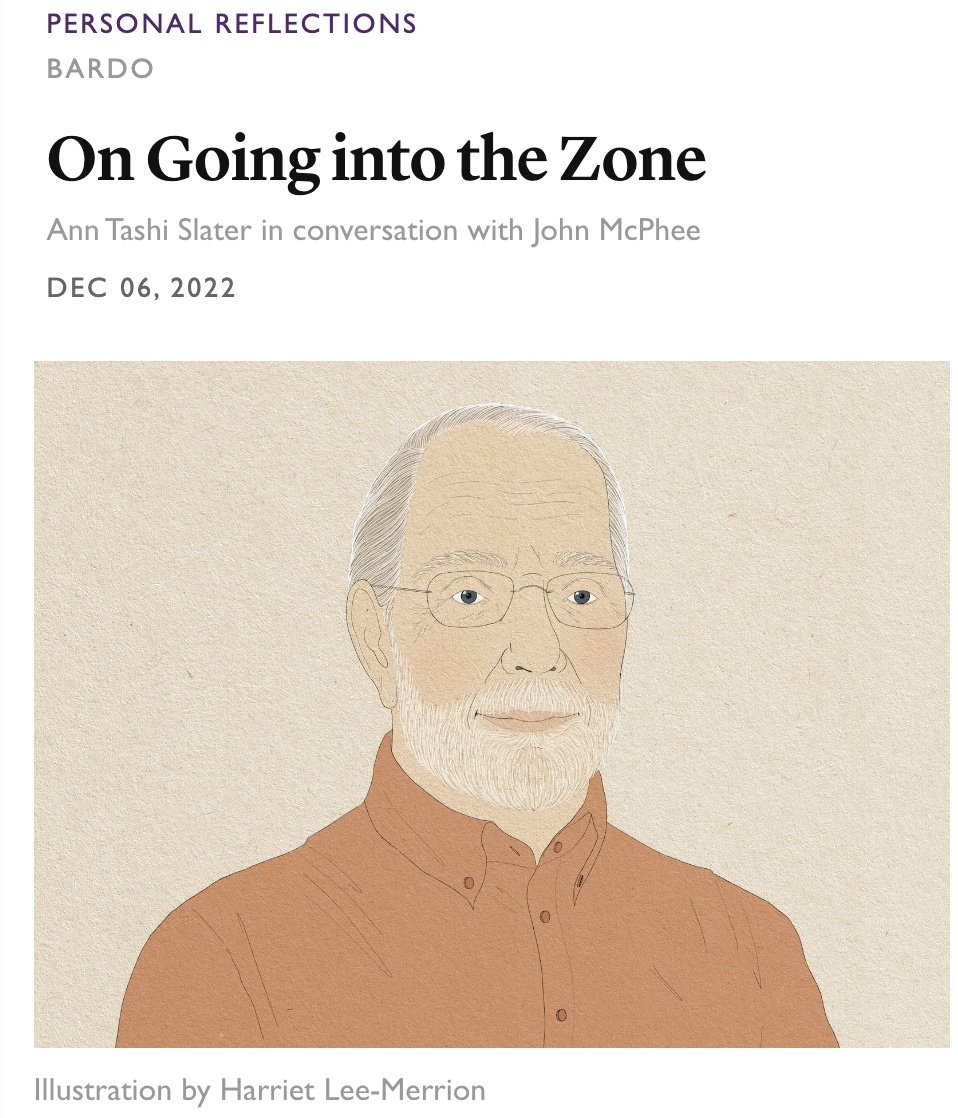
John McPhee: “On Going into the Zone”
The latest in an interview series I’ve launched with Tricycle about Tibetan bardo “between-states” in everyday life. The conversations explore acceptance, interconnectedness, and impermanence in relation to children and parents, marriage and friendship, and work and creativity, illuminating the possibilities for discovering fresh ways of seeing and finding lasting happiness. In this interview, I spoke with Pulitzer Prize-winning writer John McPhee about bardo and the creative process. A New Yorker staff writer since 1965, McPhee has written 33 books.

Mohsin Hamid: “Every Ending Is a Beginning”
The latest in an interview series I’ve launched with Tricycle about Tibetan bardo “between-states” in everyday life. The conversations explore acceptance, interconnectedness, and impermanence in relation to children and parents, marriage and friendship, and work and creativity, illuminating the possibilities for discovering fresh ways of seeing and finding lasting happiness. In this interview, I spoke with novelist Mohsin Hamid about coming to terms with change and loss. Hamid’s new novel, THE LAST WHITE MAN, has been named one of The New Yorker’s best books of 2022.

Maud Newton: “Moving Forward in the Present by Connecting to the Past”
The first in an interview series I’m launching with Tricycle about bardo in everyday life. The conversations explore bardo concepts like acceptance, interconnectedness, and impermanence in relation to children and parents, marriage and friendship, and work and creativity, illuminating the possibilities for discovering new ways of seeing and finding lasting happiness. In this interview, I spoke with author and critic Maud Newton about the importance of connecting to our ancestors. ANCESTOR TROUBLE: A RECKONING AND A RECONCILIATION, Newton's investigation of America’s fascination with genealogy and her obsession with her own family history, was named one of The New Yorker’s and Esquire’s best books of 2022.